Budgeting
Build a budget that fits the way you plan
Choose the kind of budget that helps you make decisions: plan specific categories in detail or keep everyday spending within one flexible amount.
Category budgeting
Give important expenses a clear plan
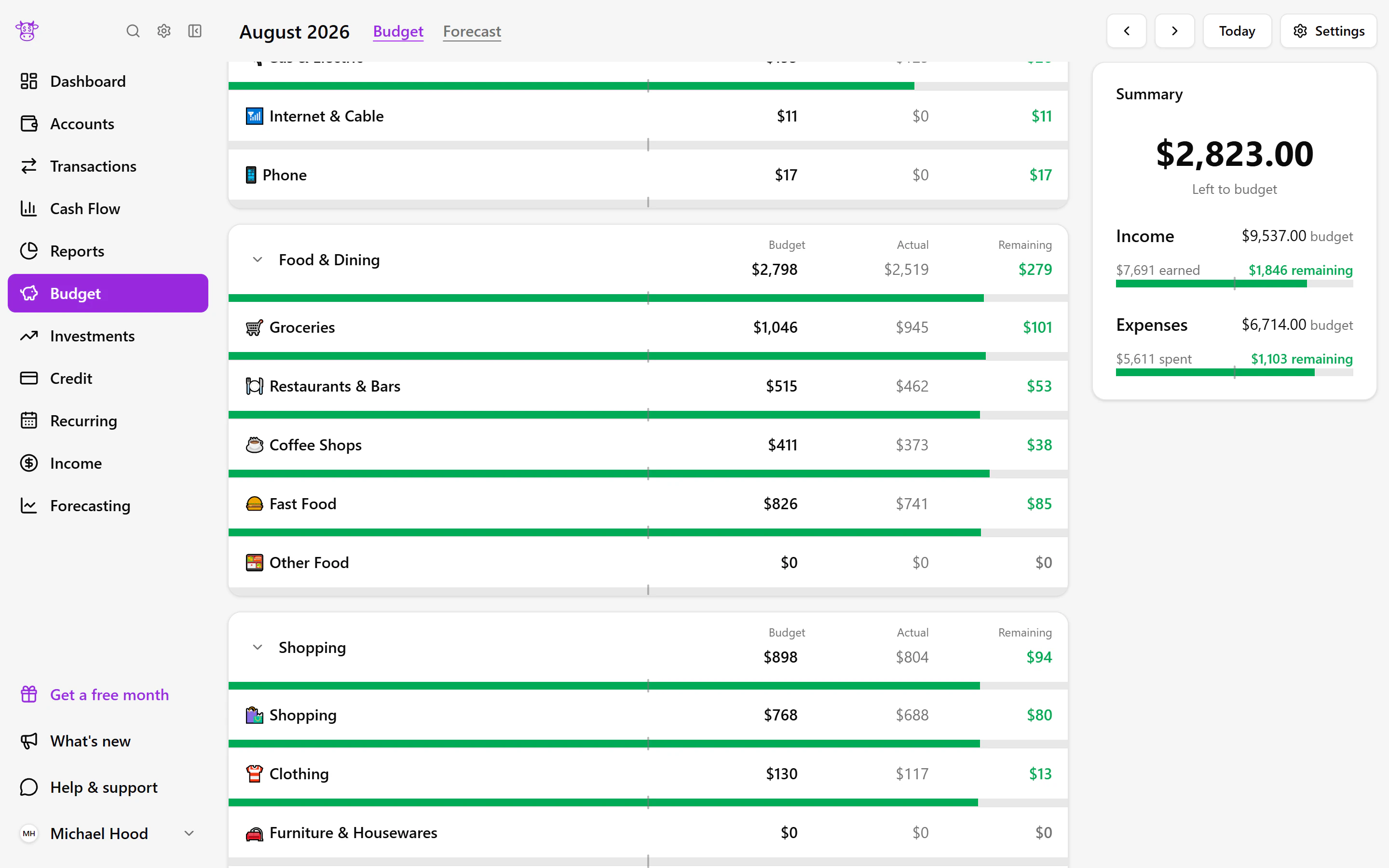
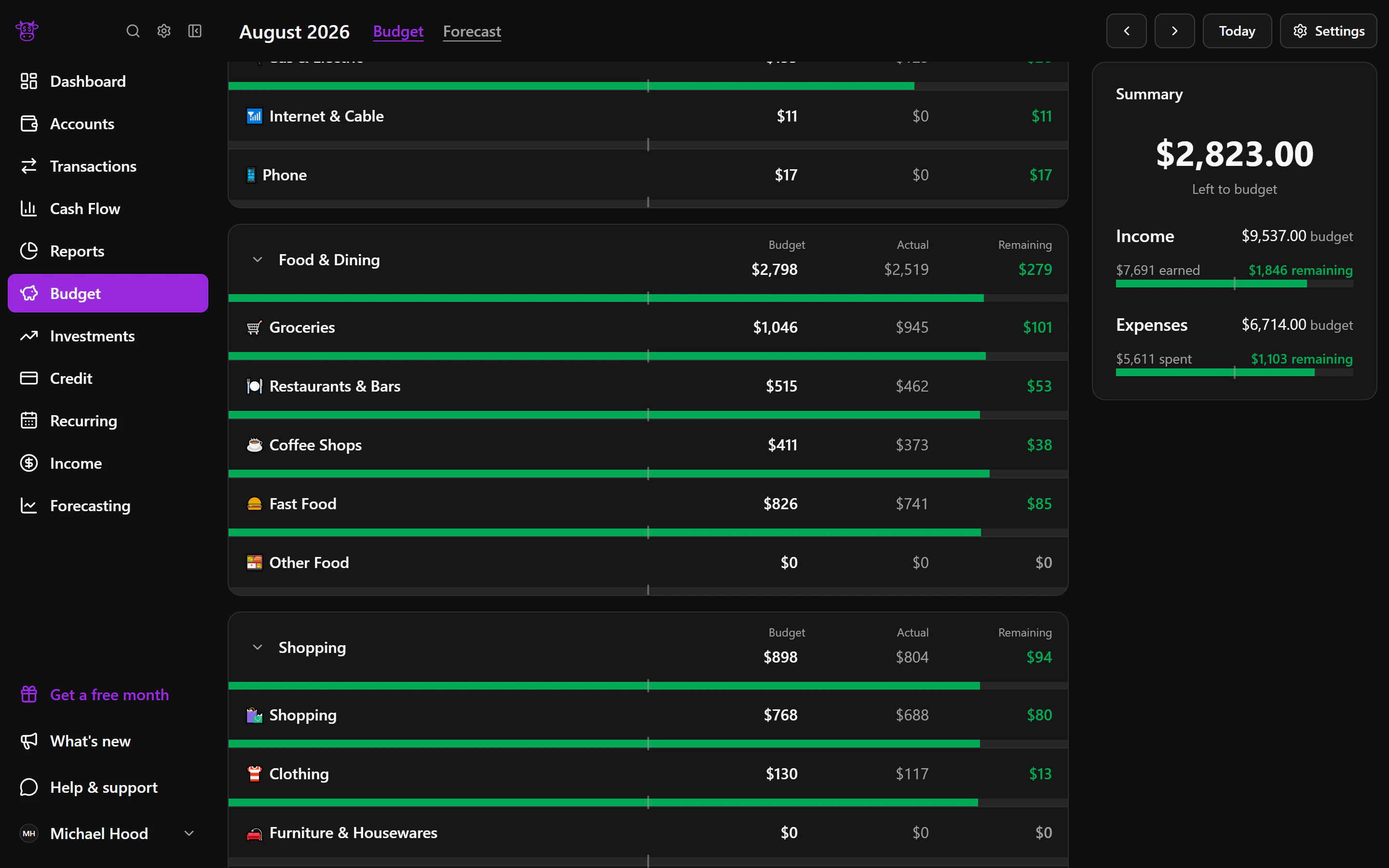
Choose an amount for categories such as groceries, dining, or travel, then see actual spending fill in as your connected transactions are categorized. Your plan and what you have spent stay together, so you can see where there is room left before the month ends.
Flexible budgeting
Keep everyday spending simple
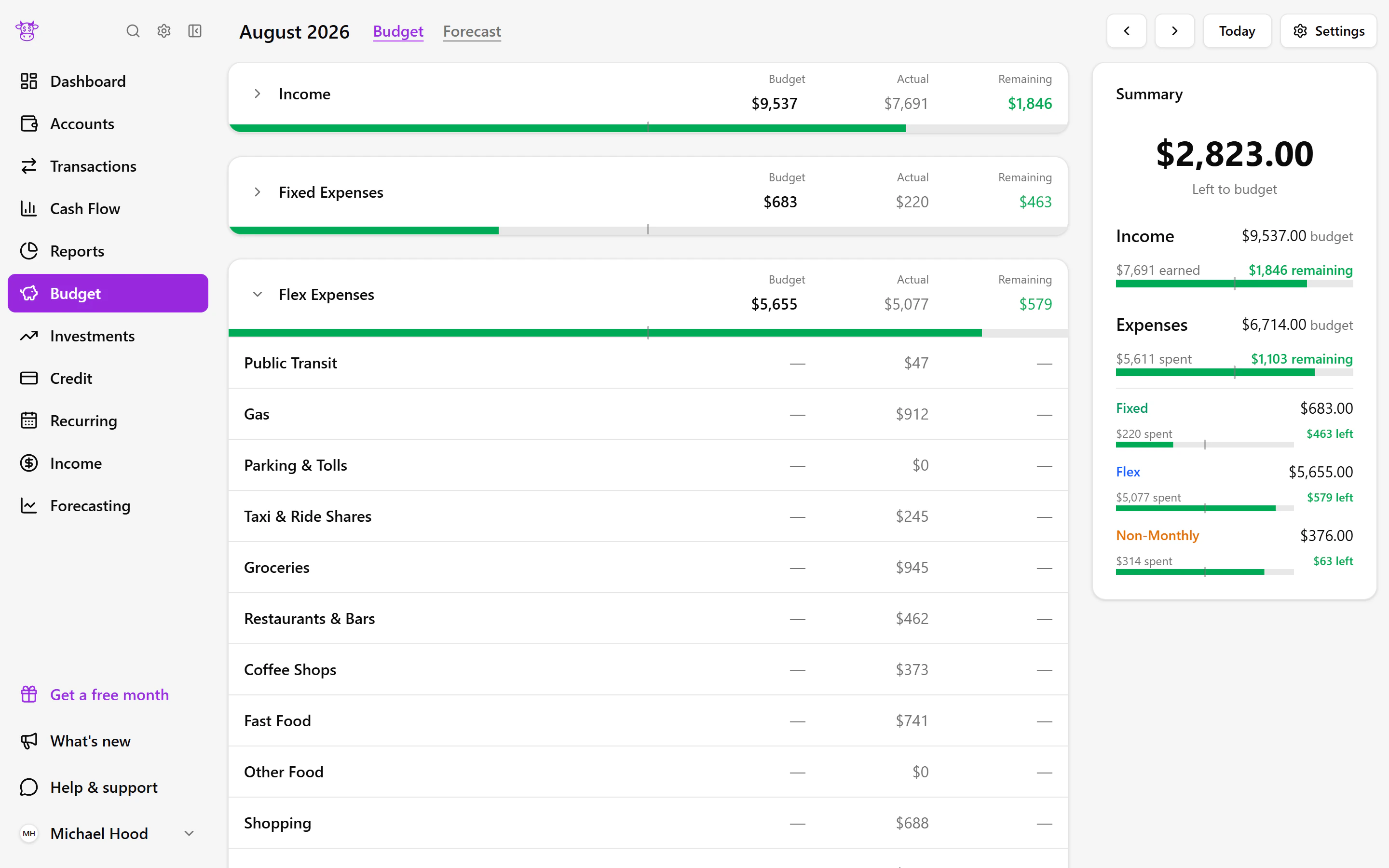
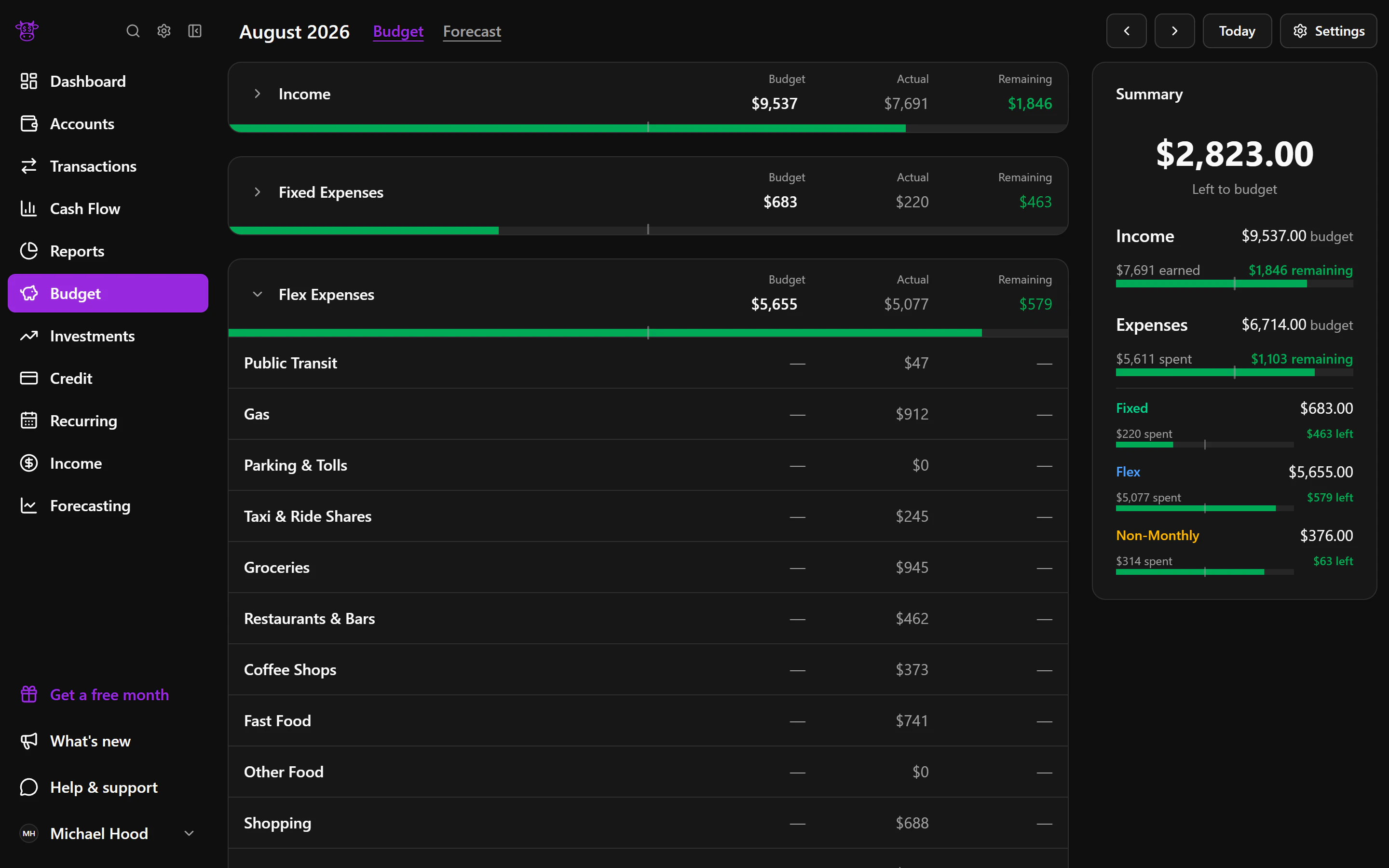
If tracking individual categories feels like too much, flexible budgeting gives you another way. Separate fixed and occasional costs, then set one amount for day-to-day choices such as food and entertainment. You still have a plan without assigning a limit to every category.
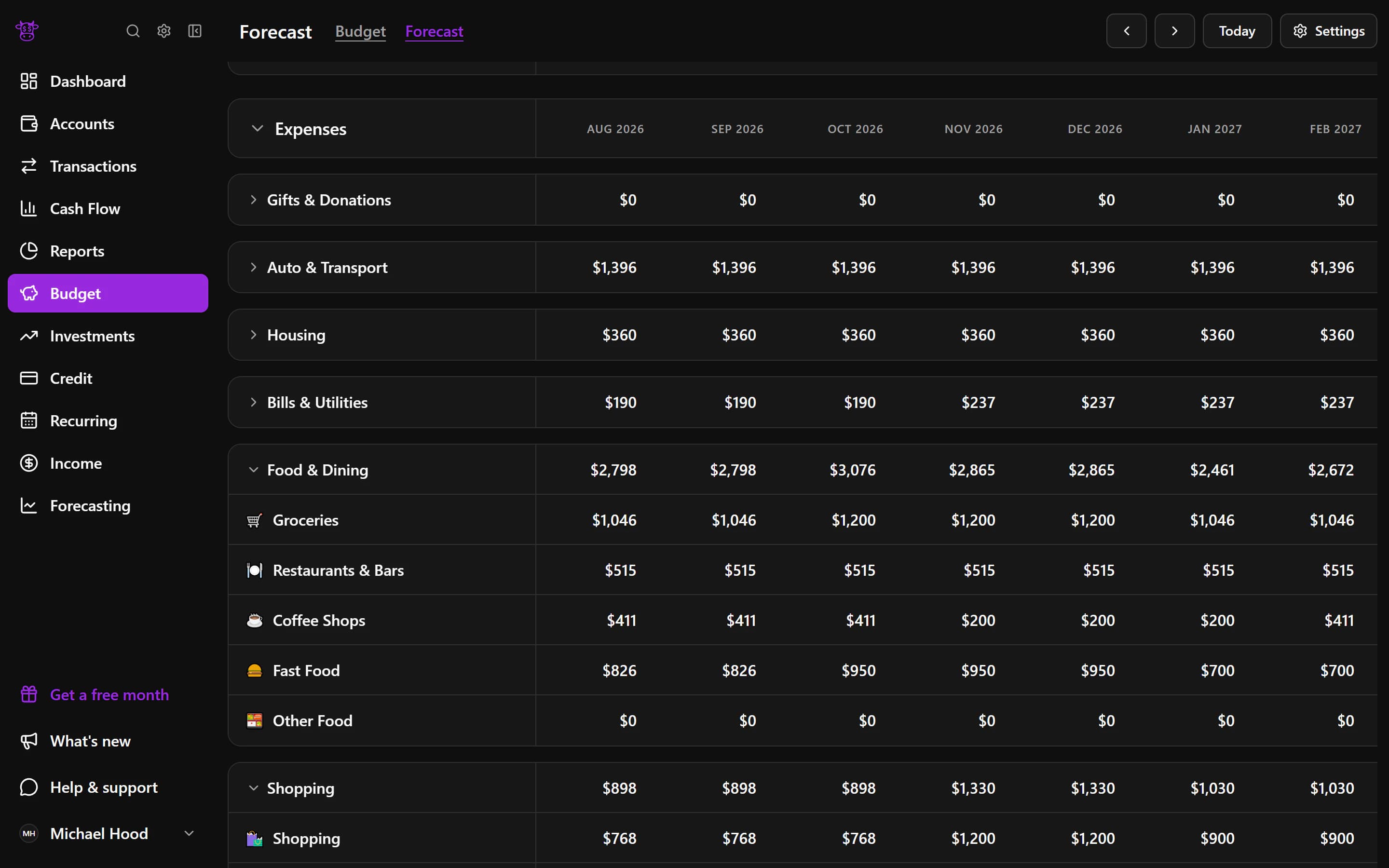
Forecast
Look ahead before expenses arrive
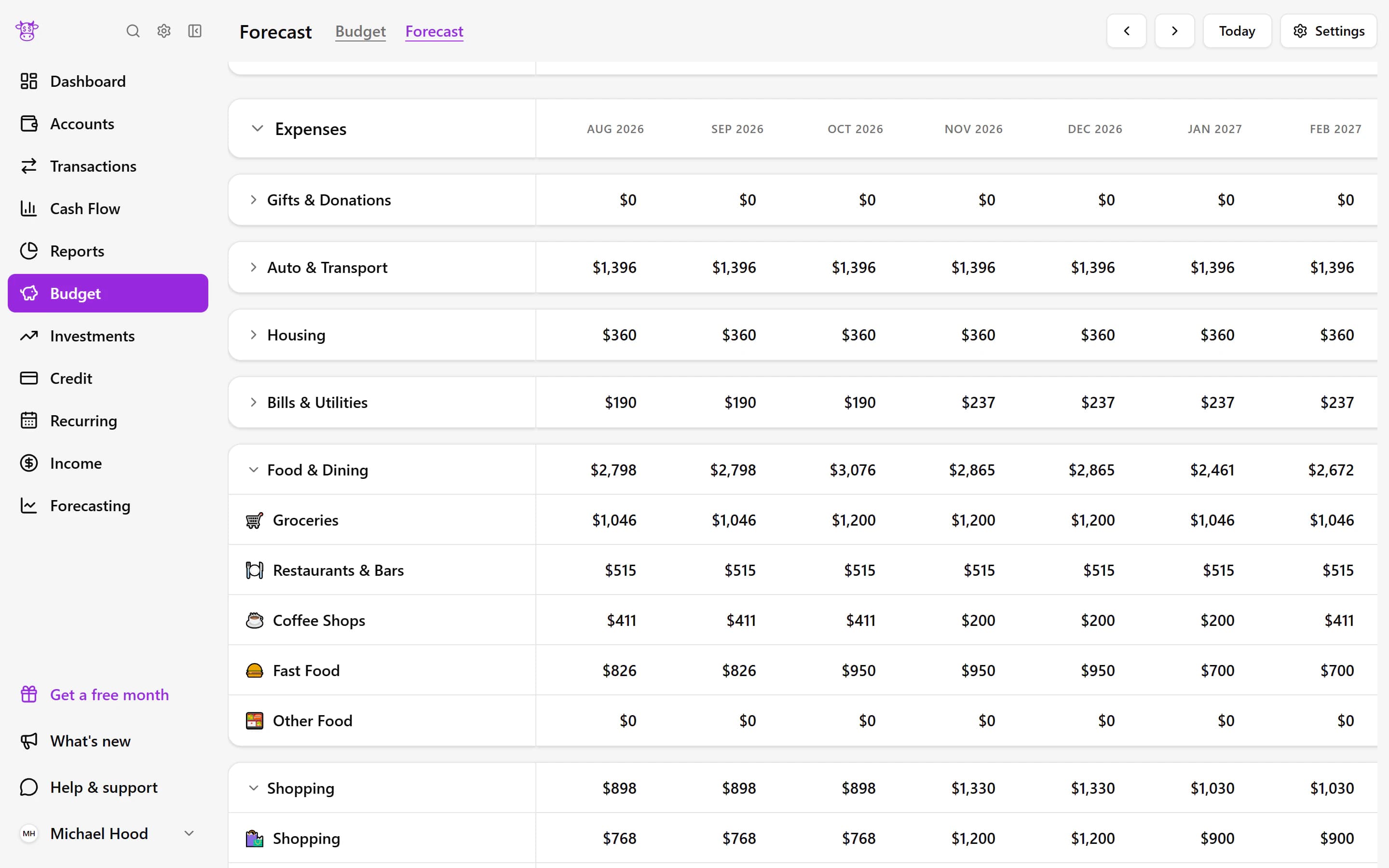
A budget should help with what comes next, not just explain what already happened. The forecast carries your plan into future months so you can spot a tighter stretch, account for seasonal costs, and adjust before you get there.
What you can do
- Plan spending category by category
- Choose a simpler flexible spending plan
- See actual category spending beside your plan
- Look ahead at future budget months
Useful for
- 01Deciding whether there is room for a purchase this month
- 02Starting a budget without tracking every category closely
- 03Preparing for a costly month before it arrives